The Quarry through history: 500 years of tradition

Traces of history in the quarry

time line

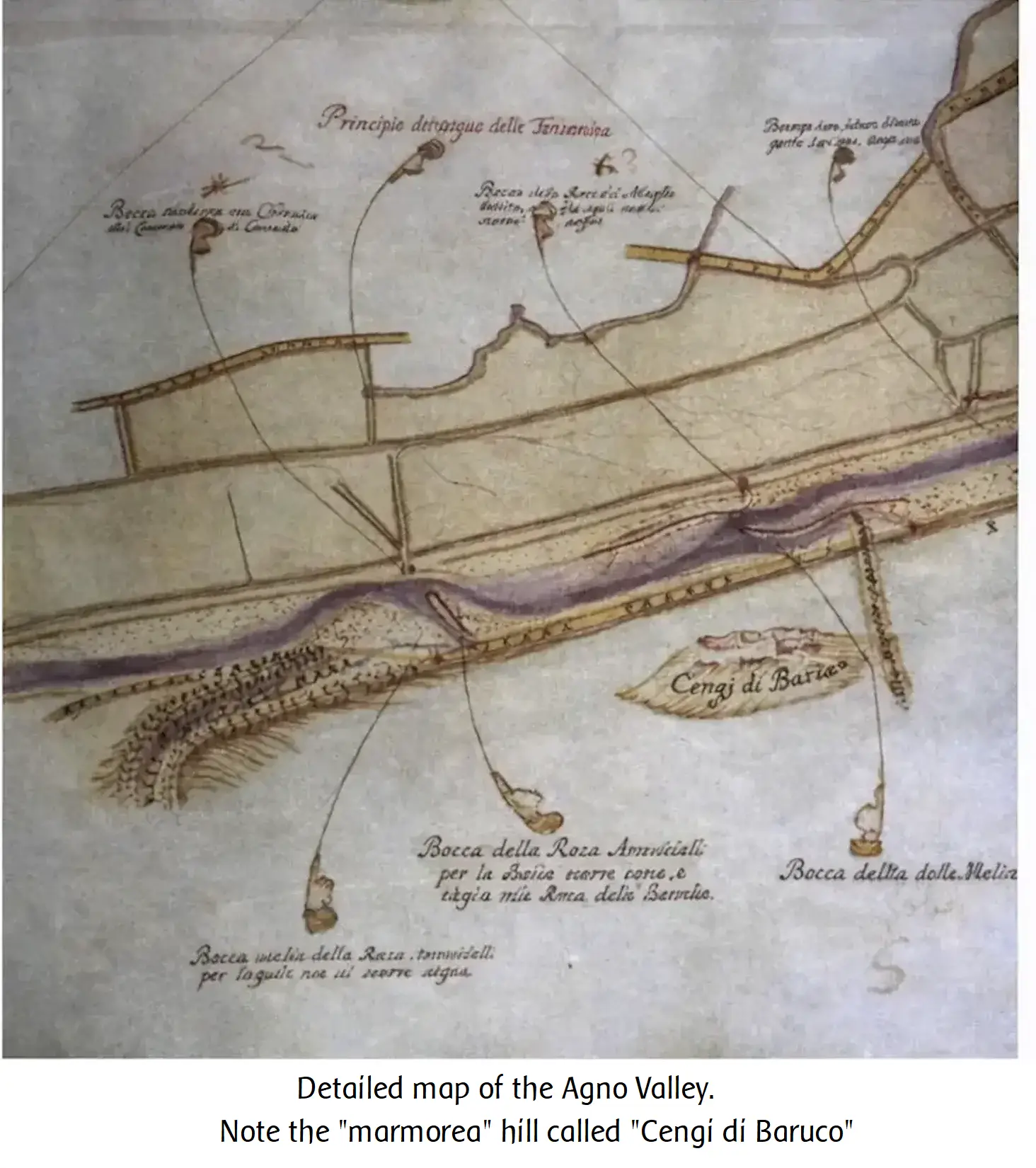
1747

history

1920

history 1900

1930

As evidence of the historical significance of Grolla hard limestone, here is an excerpt from the text written by Ramiro Fabiani on "The resources of the subsoil of the province of Vicenza" - Ed. Peronato, Vicenza 1930

Grolla Quarry – on the right bank of the Agno.
It faces a tributary valley and therefore, due to the slope of the beds towards the axis of the main valley, it presents favorable conditions for exploitation.
It provides a variety of stone with a uniform or veined olive-gray hue, with black and white speckles, called “olivo” which can be extracted in large monoliths.
The largest monolith extracted so far exceeded 30 cubic meters.

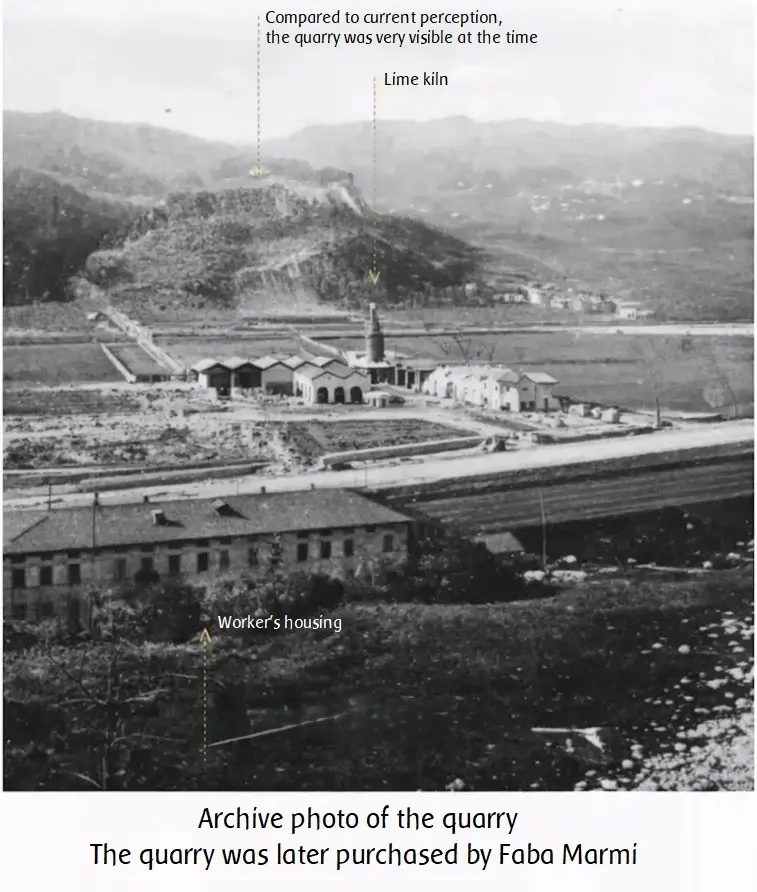
The blocks, cut with a helical wire, are loaded by means of a loading platform onto a trolley powered by a 4 HP electric motor which, via railway and crossing the Agno on a special bridge, goes to the plant known as Spagnago, which, like the quarry, is owned by the Dalle Ore company.
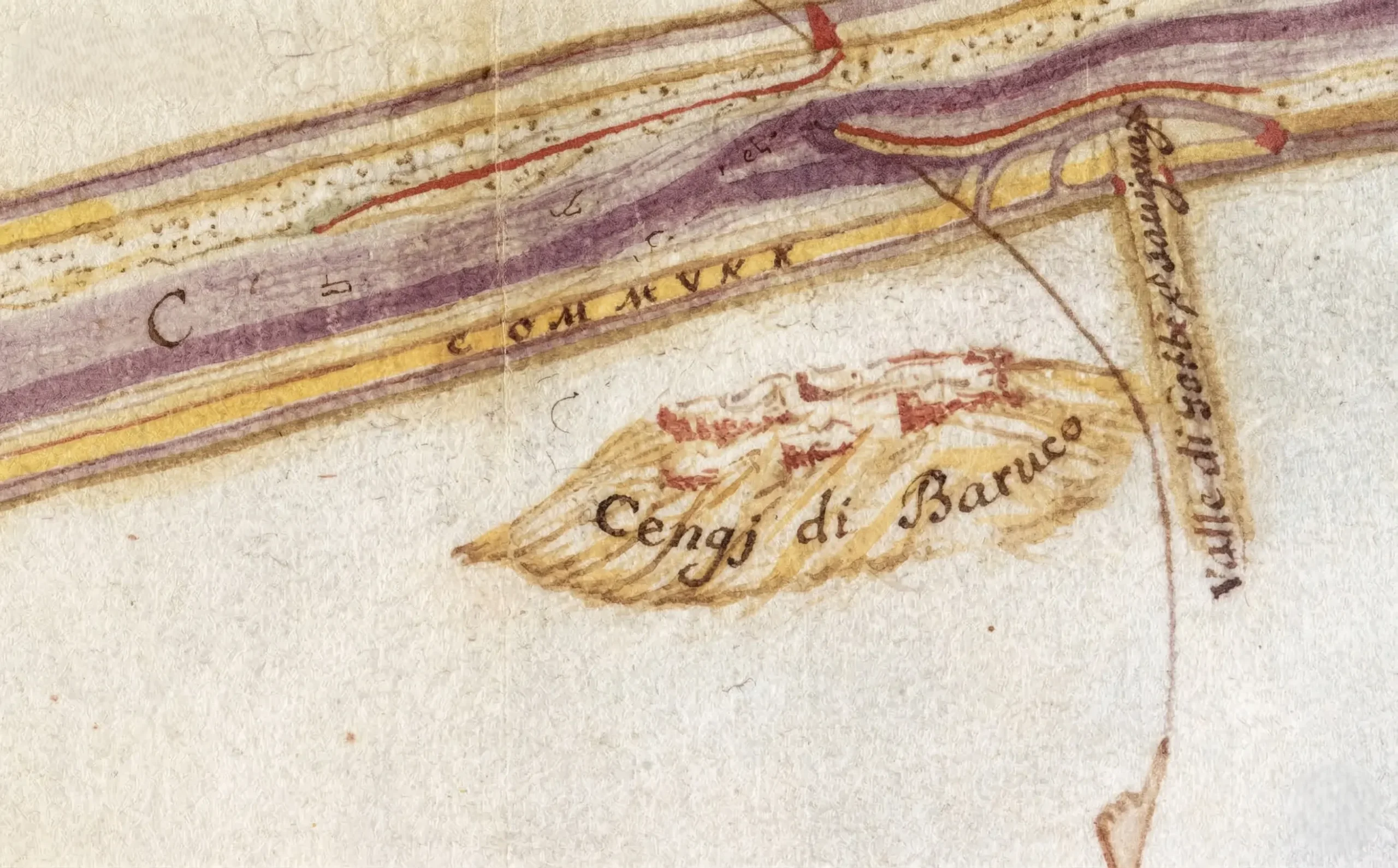
This company also operates other quarries on the right side of the valley in the Cengi area, near the hamlet of Piana (municipality of Valdagno), which provide varieties of pink and coral stone.

The Spagnago plant (which is connected to the Recoaro-Vicenza railroad) includes three frames, three helical wire saws, and a workshop comprising a shaping machine, a diamond saw, a carborundum disc saw, two polishers, and fourteen pneumatic hammers. It consumes 70 HP.

Including in the calculation the product of a quarry operated by Umberto Olivieri, which is located almost opposite the Spagnago plant and provides pink stone, the total production of the Agno Valley quarry is approximately 1,000 cubic meters per year. An average of 50 workers are employed per day.

4/5 of the production is sold in squared raw blocks, exported mainly to North and South America; the rest is processed in the Spagnago plant and destined for the domestic market.
In the same plant, a lime kiln utilizes the waste from the quarries, with a daily production of 6 tons of lime for eight months of the year.
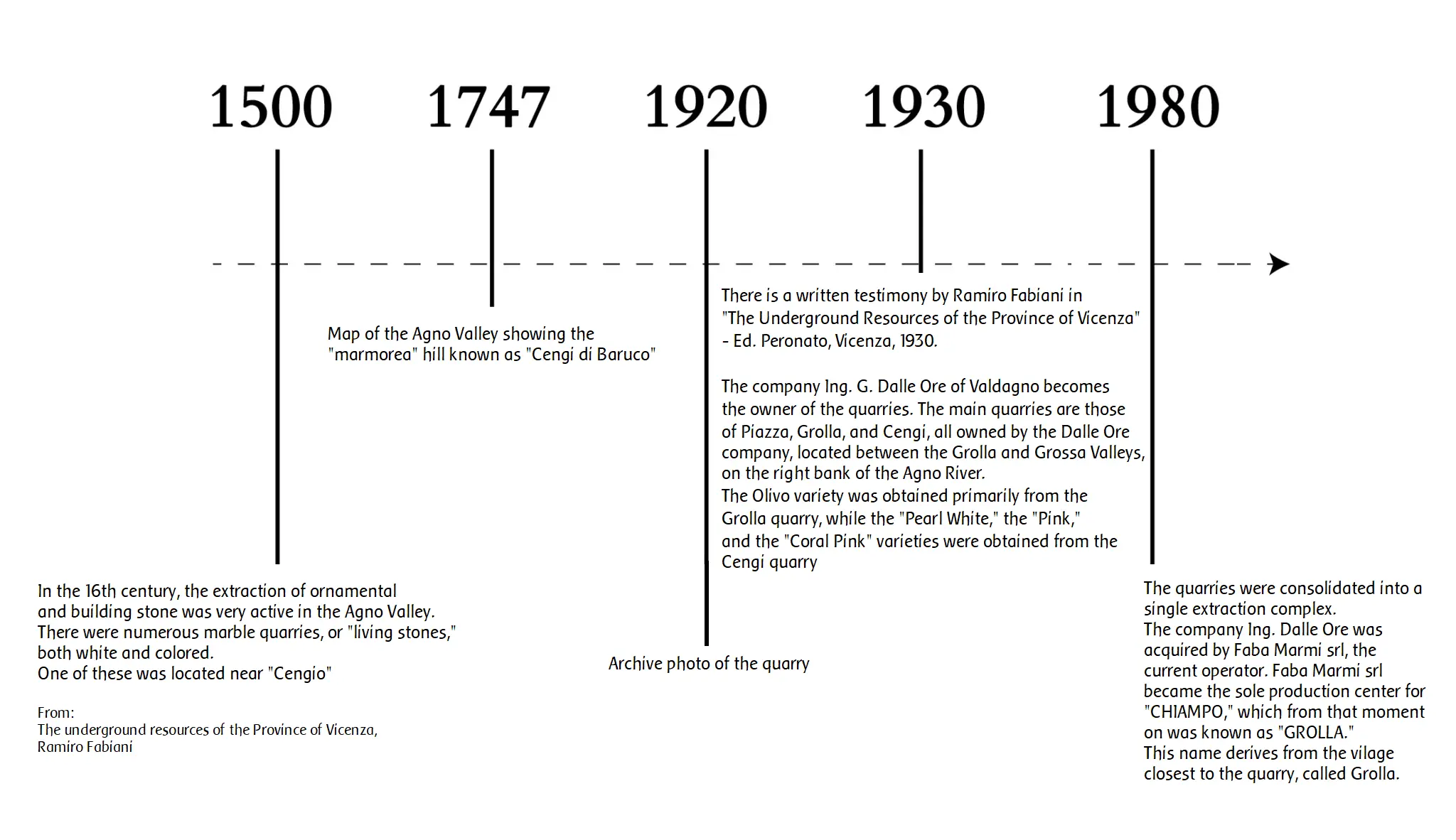
1980

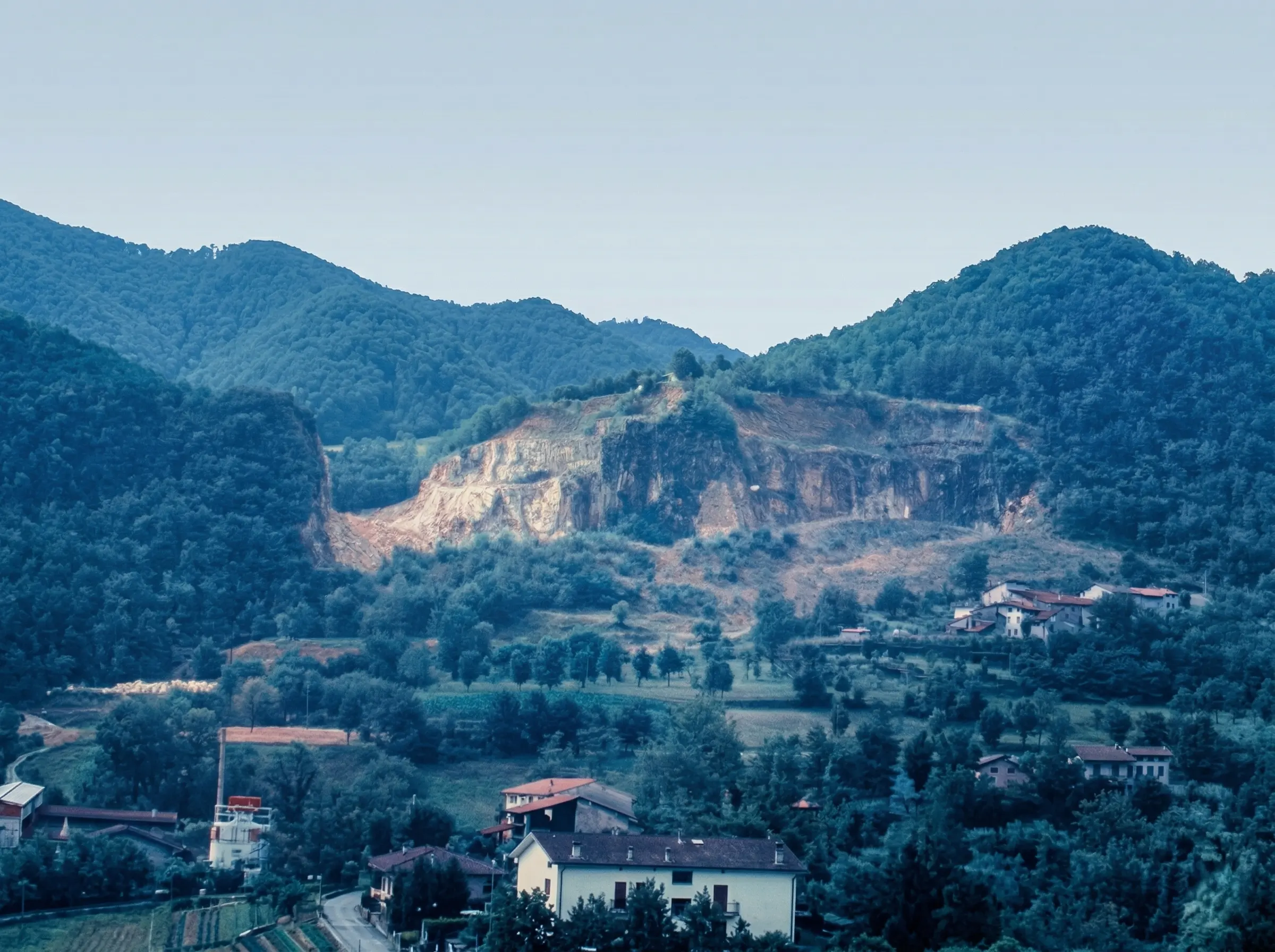
The main quarries were those of Piazza, Grolla, and Cengi, located between Val Grolla and Val Grossa, on the right of the Agno stream. For many years, these extraction sites represented the heart of stone production in the territory.

In 1980, a fundamental transition took place: the quarries were merged into a single large extraction complex. In the same year, Soc. Ing. Dalle Ore was acquired by Faba Marmi Srl, which remains the current operator today.

Faba Marmi Srl became the sole production center for “Chiampo”, which from that moment took the name “Grolla hard limestone”. A name derived from the hamlet closest to the quarry, called Grolla, and destined to become over time a symbol of identity, tradition, and territory.

Past projects in Grolla

San Michele Bridge

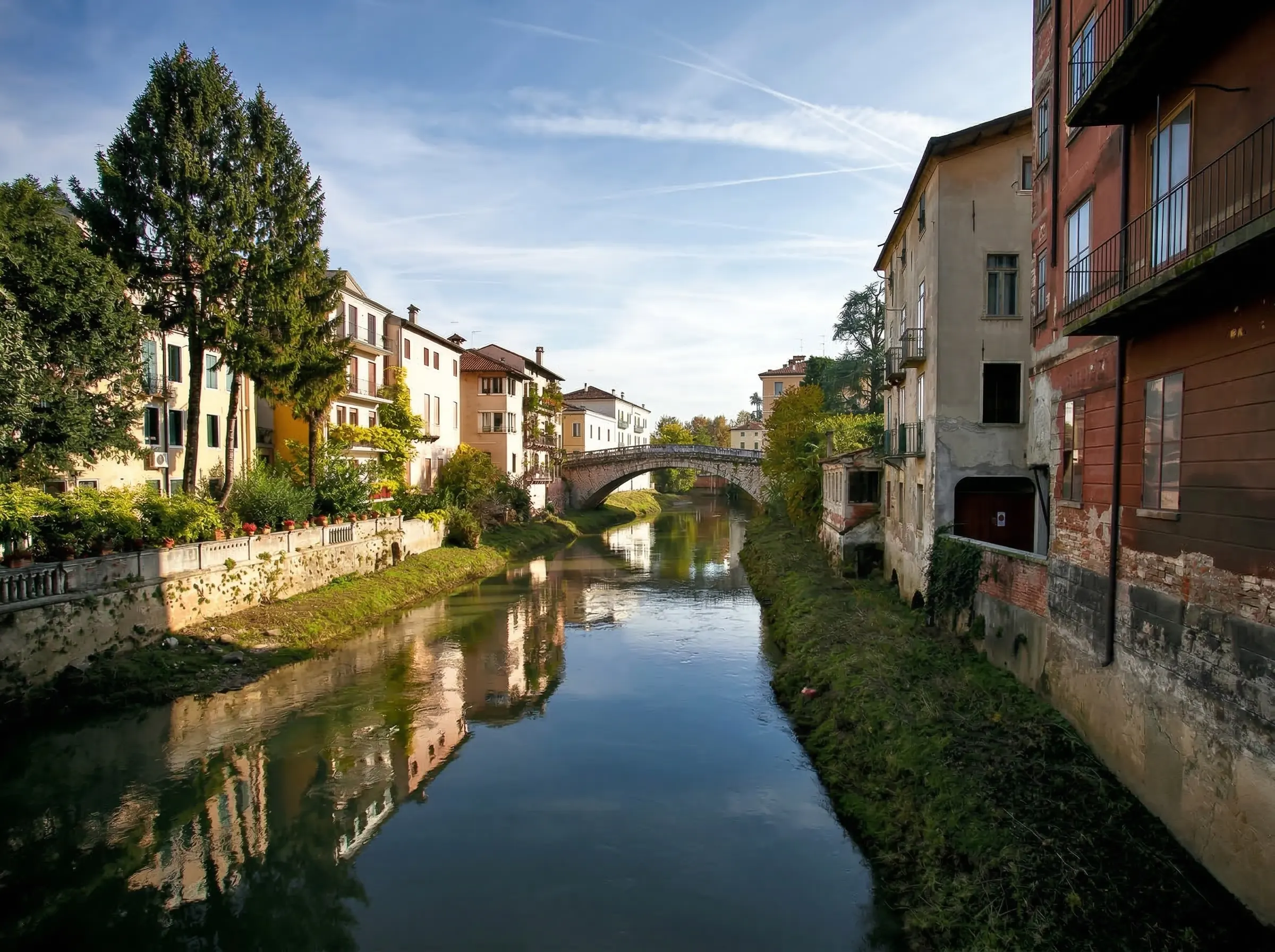
The San Michele Bridge in Vicenza is considered one of the most beautiful single-span bridges in Italy.
It was built between 1621 and 1623 at the meeting point of the two rivers that cross Vicenza.
Its position was of exceptional strategic importance; just after the bridge stood the district still known today as “Le Barche,” once a landing point and river port for the city:
merchants arrived from Venice, traveling up the rivers with boats laden with herbs and spices.
The designers chose to use “Chiampo” entirely for its construction, also in consideration of the beauty and elegance the work had to exhibit as the city’s “calling card”
for all the merchants arriving by river.

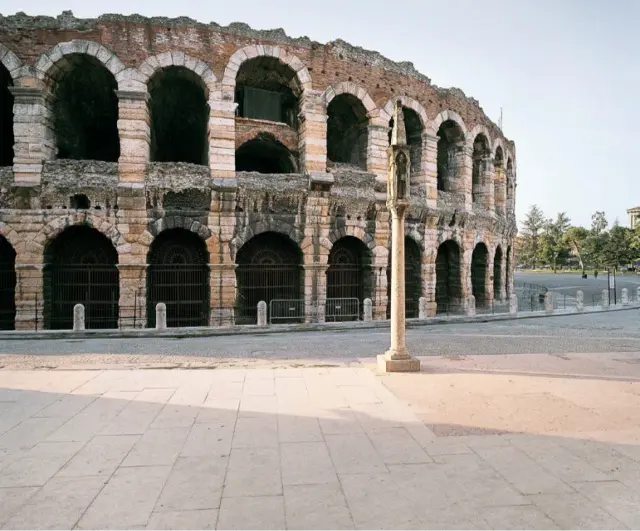
Liston of Piazza Bra

Before 1770, the square was made of beaten earth; it was later paved in stone to become known in popular jargon as “el listòn.”
The vast open space of the Bra was once used by stone cutters and stonemasons who worked here in the open air and directly supplied the stones to build and decorate the city.
Wolfgang Goethe, during his “Italian Journey 1786-1788,” recounts with amusement upon arriving in Verona that “at sunset I walked along the amphitheater’s edge enjoying the most beautiful view of the city.
I was all alone and down on the wide pavement of the Bra a multitude of people were walking.”
Marmi Faedo replaced the damaged slabs of the “Liston,” supplying approximately 600 m² of Grolla with a sawn-cut surface and sharp edges.
Once the flooring was laid, a non-slip bush-hammering process was performed to make the surface similar to the original stones.